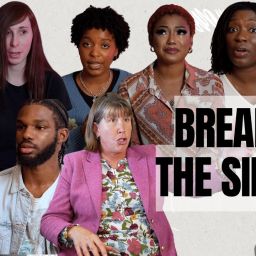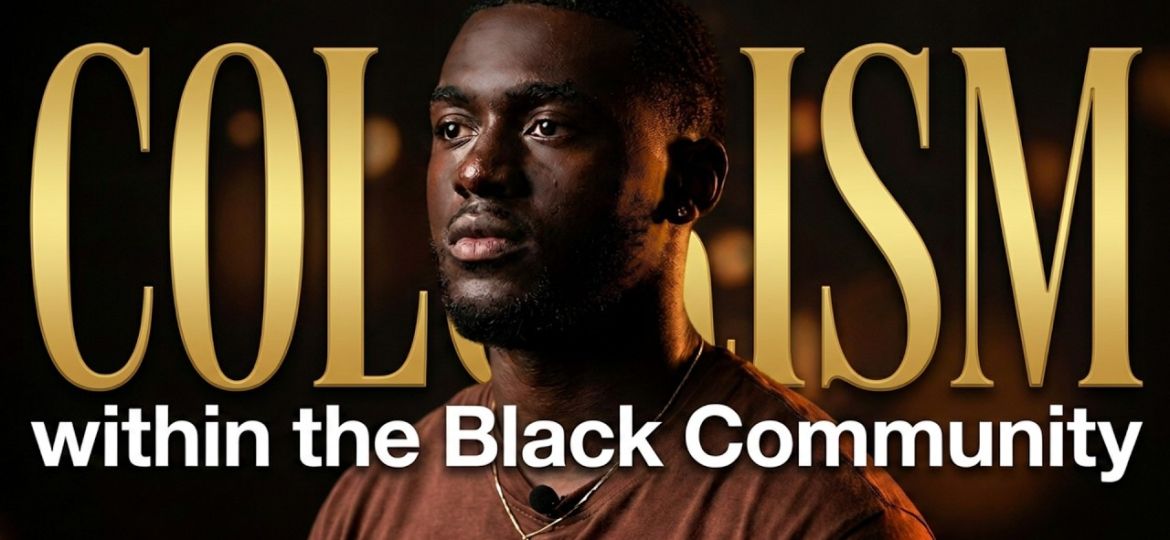
This documentary was my Applied Research Project for my master’s degree, and it marked my introduction into the documentary space. It is where I first learned that I could take research, lived experience, and a camera, and turn them into something that helps people feel seen. Everything I have made since traces back to this project.
Why This Project
Colorism is the practice of discrimination that favors one skin color over another. In the United States, it shows up when a person with lighter skin, straighter hair, and more Eurocentric features is preferred over someone with darker skin, kinkier hair, and Afrocentric features. The title of the film came directly from the conversations I had while making it. They said dark like it was a bad thing. That sentence carried everything I wanted this project to confront.
I chose the documentary method because I wanted to investigate how colorism affects Black people in the United States, and how it has been perpetuated through media in ways that quietly shape stereotypes. I wanted people to speak in their own words, and I wanted viewers to recognize something true in what they heard.
What the Research Shows
Colorism is not only a feeling or a social slight. It is measurable, and its effects are serious. Several studies since 2006 have documented how darker skin is associated with longer prison sentences for the same crime, decreased mental and physical health, lower marital rates for women, and lower wages for men and immigrants. University of Georgia News
The harm reaches into health as well. Darker-skinned Black Americans tend to experience worse physical and mental health than their lighter-skinned counterparts across many outcomes, including psychological distress, depressive symptoms, and self-rated physical and mental health. Researchers describe how lighter-skinned Black Americans have benefited from systemic preferential treatment for centuries, resulting in skin tone stratification across social, material, and health indicators within Black communities. Sage JournalsSage Journals
These findings confirmed what the people in my film were already telling me. Colorism is systematic, and it is harmful for everyone affected by it.
What I Learned
Making this film taught me as much as the research did. Three things stayed with me.
Colorism is perpetuated heavily within the Black community, but it does not stop there. It lives in society and its institutions.
Many people understand concepts like intersectionality and framing instinctively, but struggle to fully articulate them outside of their own experiences. Giving people space to talk through that was part of the work.
And colorism is not just a social issue. It is systematic, and it causes real harm to all the people it touches.
Resources and Further Reading
If you want to learn more about colorism and its impact, the research linked throughout this project offers a strong starting point, including work published through the American Academy of Arts and Sciences and ongoing studies on skin tone stratification in the United States.
Credits
- Director, Editor, and Producer: Ta’Bria Snowden
- Camera and Interview Setup: Khadir Freeney and Ta’Bria Snowden
- Committee Chair: Dr. Travis Bell
- Committee Member: Dr. Roxanne Watson
- Interviewees: Parnell Anderson, Lincoln Esmie Jr., Tori Brown, Alphonso Hicks, Jacob Darko, Pascal Lindsay, Karen Moore, Dr. Calandra Peterkin, Samborn Nwokoye, Bedjena Resiliac, Nellie Onugha, and Dr. Tangela Serls
- University of South Florida, Applied Research Project, 2023